Rather than cycling your heater on and off at high temperatures, “it’s better to find the ideal constant temperature and keep it running” for efficiency. It’s recommended to set temperatures around 20 degrees Celsius in winter, or as low as 18 degrees for home use.
Every degree you add to your heating system may lead to a 10% energy increase, while reducing temperature by 7-10 degrees for eight hours daily could decrease electric bills by up to 50%.
How can I keep my house warm in winter?
Beyond heating systems, consider the following:
Insulating floors, walls, and roofs
Installing double-glazed windows
Adding winter rugs
Managing curtains and blinds to maximize solar warmth
When Should I Turn on the Heating?
Activate heating when thermostats read between 17-18 degrees Celsius.
What You Should and Shouldn’t do During the Winter
Do:
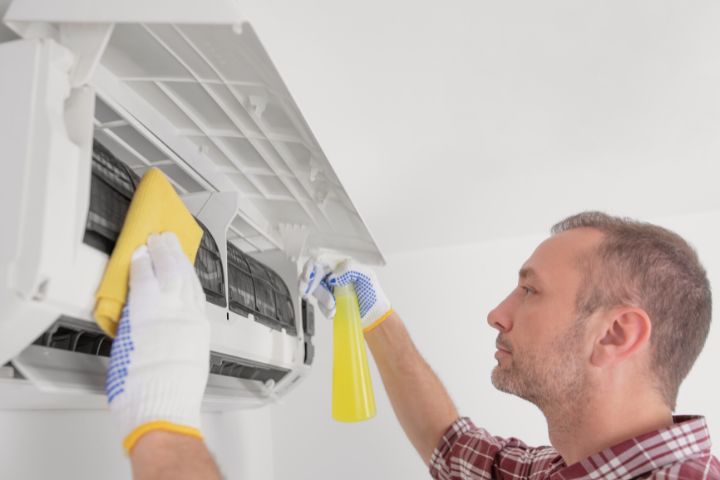
Schedule regular professional maintenance
Set consistent on/off times for efficient operation
Don’t:
Instantly raise temperature to maximum settings
Frequently turn heating on and off (allow full 3-hour cycles minimum)
Use non-reverse-cycle units for heating
Should I Consider a Reverse Cycle Air Conditioner?
Reverse-cycle systems are the best choice for Australian homes, offering both heating and cooling capabilities with 20-year potential lifespans when properly maintained.
Air conditioning is usually good for your health, especially when you live in a hot, humid climate like Brisbane’s. However, the effects of air conditioning on your health depend on how you use and maintain it. In this article, you’ll learn what air conditioning does for your body. We’ll also explain how to use it […]
Zoning lets one ducted system treat different parts of a home differently. Imagine setting the right indoor temperature that suits everyone. Honestly, that is as close to the definition of a near-impossible task as you can get. Each of us may have individual cooling and heating needs and there is no one comfortable indoor temperature […]
Saw water leaking from your AC unit? You’re not alone. This issue usually happens when the condensate drain line is blocked, though several other factors could be at play. If you don’t fix your AC, the water leaking from it could reach its electrical components, stain your walls and ceilings, encourage mould growth, or damage […]
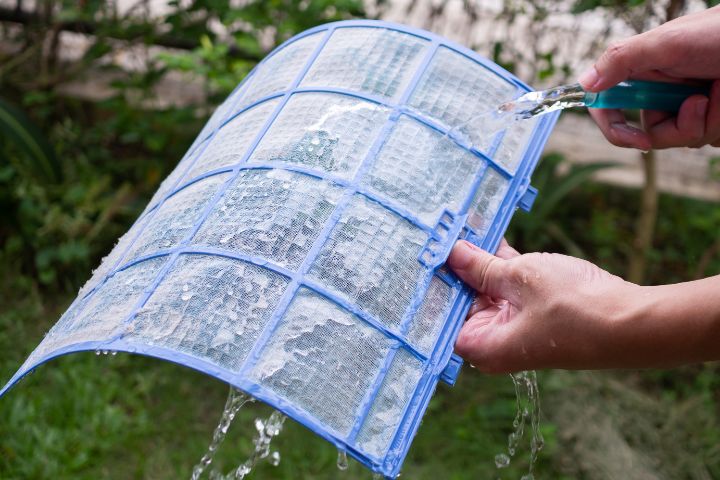
Cleaning your air conditioner filter regularly improves the AC’s performance, reduces how much energy it consumes, and extends its lifespan. You’ll also breathe in healthier air when you’re indoors. The cleaning process is way easier than you think. Let’s walk through it together. Do these before cleaning your AC Turn off the air conditioner Safety […]
You set a target temperature of 23°C. Minutes later, you raise it to 24°C. That 1°C increase may seem minor, but it makes a big difference in the air conditioner’s energy consumption. Generally, for every 1°C increase in the target temperature, an AC’s energy usage drops by 5–10%. For homeowners in Australia, even slight AC […]
You want to find the perfect climate control solution for your home. But there’s just a bit of a snag: you can’t seem to choose between a ducted air conditioner and a split system. Ducted systems are a great fit for you if you’d like to maintain the same temperature across all rooms in your […]
The math should be straightforward: find out how many watts you need per square metre and multiply that by the floor area of your room. In reality, the answer is rarely that simple. Most commercial calculators recommend 3.5 to 5 kilowatts for a 30 square metre room, which is a typical range, yet you can’t […]
Operating quietly and reducing energy consumption by up to 44%, inverter air conditioners are easy to sell. An inverter air conditioner owes its energy efficiency to advanced inverter technology that allows the compressor to adjust its speed based on your cooling needs. That said, choosing an inverter AC isn’t always a no-brainer. There are still […]